
Machine Shop Capability Statement Template: A Practical Guide


A machine shop capability statement gives a buyer a short, shareable account of the work your shop can support. It helps an engineer introduce you to purchasing, gives a sourcing contact something useful to forward and keeps an initial conversation focused on relevant requirements. A good statement answers enough questions for the buyer to decide whether to discuss an RFQ.
This guide includes a machine shop capability statement template you can adapt with your own approved information. Start with the work you want to discuss, choose evidence your team can publish and give the buyer a clear route to the next conversation. Keep a maintained website page behind the document so a forwarded copy leads to current information.
The statement also needs an owner. Equipment, contacts, certifications and scheduling conditions change. A short document becomes more useful when someone can verify its contents and replace an old version when the facts change.
Choose the buyer and the next conversation
Write down who will receive the statement and why they would keep it. An engineer considering prototype components may need process scope, materials, practical geometry limits and a technical contact. A purchasing manager comparing suppliers may also need location, recurring production fit and available documentation. Their questions can overlap while their starting points differ.
Choose one primary audience for the first version. Define the work you want that audience to send. A short summary might identify a process family, the kinds of components the shop regularly discusses and the information needed for review. Ask estimating to approve that scope before the statement reaches a buyer.
The U.S. Small Business Administration describes a capability statement as a concise introduction and recommends adapting versions to the audience. That principle applies to an industrial supplier introduction. Keep each version tied to the actual buying context. A general introduction and a statement responding to a particular buyer request may need different examples and emphasis. SBA capability statement guidance.
Give the reader one useful next step. They might visit a maintained capability page, ask a technical question or request instructions for sharing a drawing package. Identify the contact responsible for that step. An inbox alone leaves the buyer to work out what information belongs in the first message.
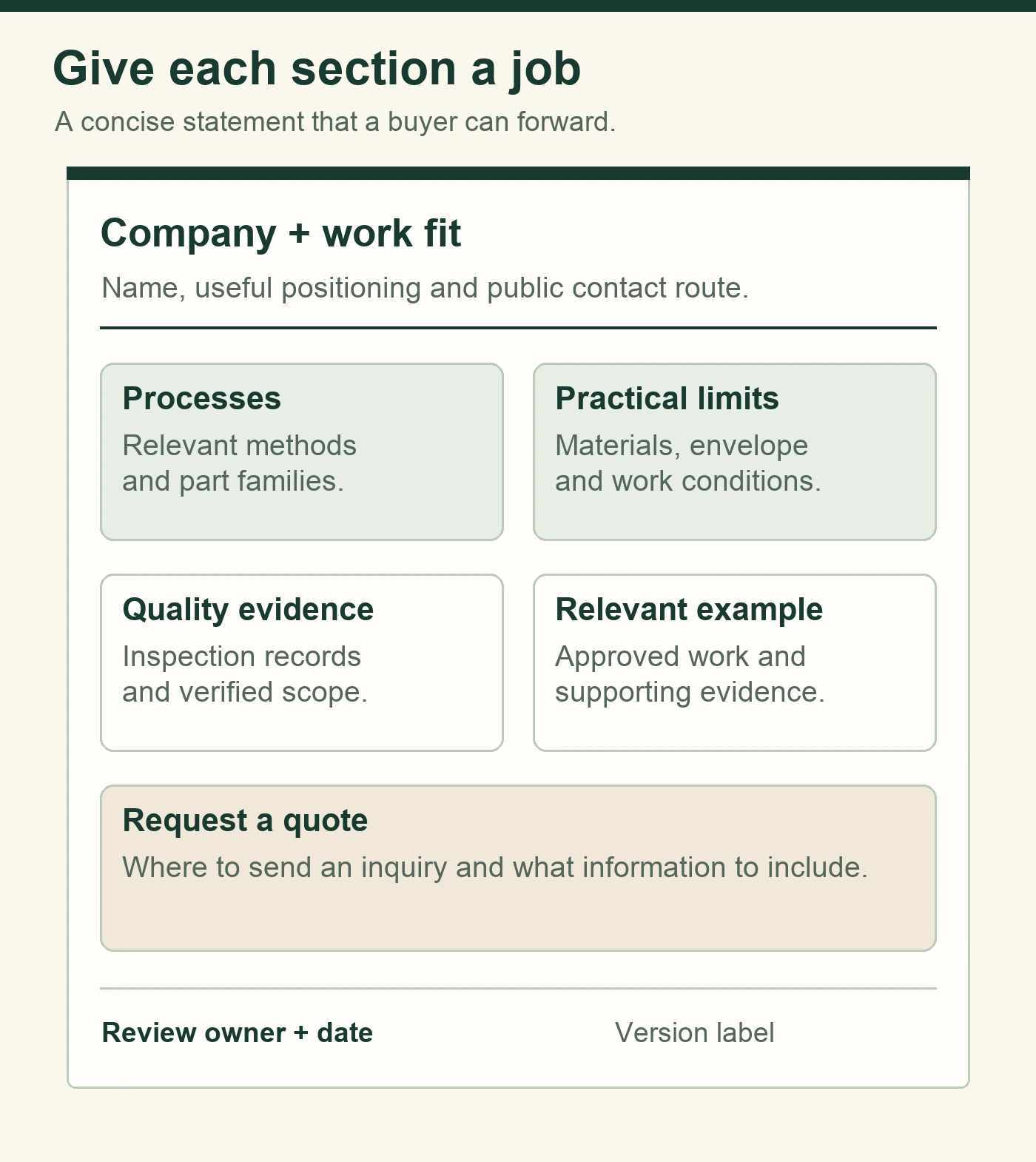
Build the machine shop capability statement template around six fields
Start with the company name, location, website and a plain-language description of the work. Use the name your buyers recognize while keeping the relationship to the legal business clear where relevant. Make the document title easy to identify in a downloaded file or forwarded attachment.
The second field describes core capabilities. List the processes the shop performs and explain the practical scope a buyer should consider. Separate an installed machine’s published specifications from what your team is prepared to promise on a particular part. Use the machine shop capability page guide to develop the fuller explanation behind the summary.
The third field covers materials and production fit. Name materials your team can accurately discuss, then describe the types of quantities or repeat work you want to review. Use qualified language when fit depends on geometry, tooling, material condition or scheduling. Have the person responsible for production review these descriptions.
The fourth field summarizes quality and inspection support. State what is available and which details need discussion before quoting. Where a certification is relevant, use the current approved name and scope. Link to the maintained quality page for additional information your team has approved.
The fifth field supplies relevant evidence. A brief permission-cleared example, a useful process detail or an accurately described inspection method can help a reader evaluate fit. Select evidence that supports the work being offered. The final field identifies the next action, contact and document revision date.
Use this drafting sequence to give each field a clear job. Write a company summary that names the primary process and intended work. Add a capability paragraph that explains what a buyer can sensibly ask the team to review. Follow it with materials and production fit, then quality and inspection information. Choose one relevant item of approved evidence. Finish with the contact, public information link and revision date.
For each field, leave an explicit internal question when the fact is unknown. “Ask production to confirm the material families” gives the reviewer a concrete task. Clear these questions before exporting the public version. This keeps uncertain draft wording from becoming an accidental sales claim.

Use a fictional example to test the structure
Consider a fictional shop preparing a statement for buyers of repeat turned components. Its first draft says it provides exceptional precision, competitive prices and fast delivery. Those phrases supply little information for deciding whether to send a particular RFQ.
A more useful fictional summary could read, “CNC turning for repeat orders of sleeves and spacers in approved material families. Send the drawing revision, required quantity and requested delivery date for a fit review.” The words describe an intended conversation. The shop would still need to confirm that every element matches its actual work before using similar wording.
For the capability section, the fictional team could add a process description and a link to its approved equipment list. For quality, it could describe which inspection reports are available for discussion during quotation. For evidence, it could summarize a permission-cleared component family without naming a customer or showing a restricted drawing.
Notice the questions this draft leaves for review. What does repeat work mean for this shop? Which materials can be named? Who checks the current equipment and inspection descriptions? What information must the buyer supply before anyone confirms a schedule? These questions help the team identify which statements are ready to publish.
Read the draft as though it has been forwarded without an introduction. A new reader should understand the process, the intended work and how to contact the right person. If the statement depends on a sales explanation to make sense, revise the wording before refining the layout.

Verify claims before fitting them onto the page
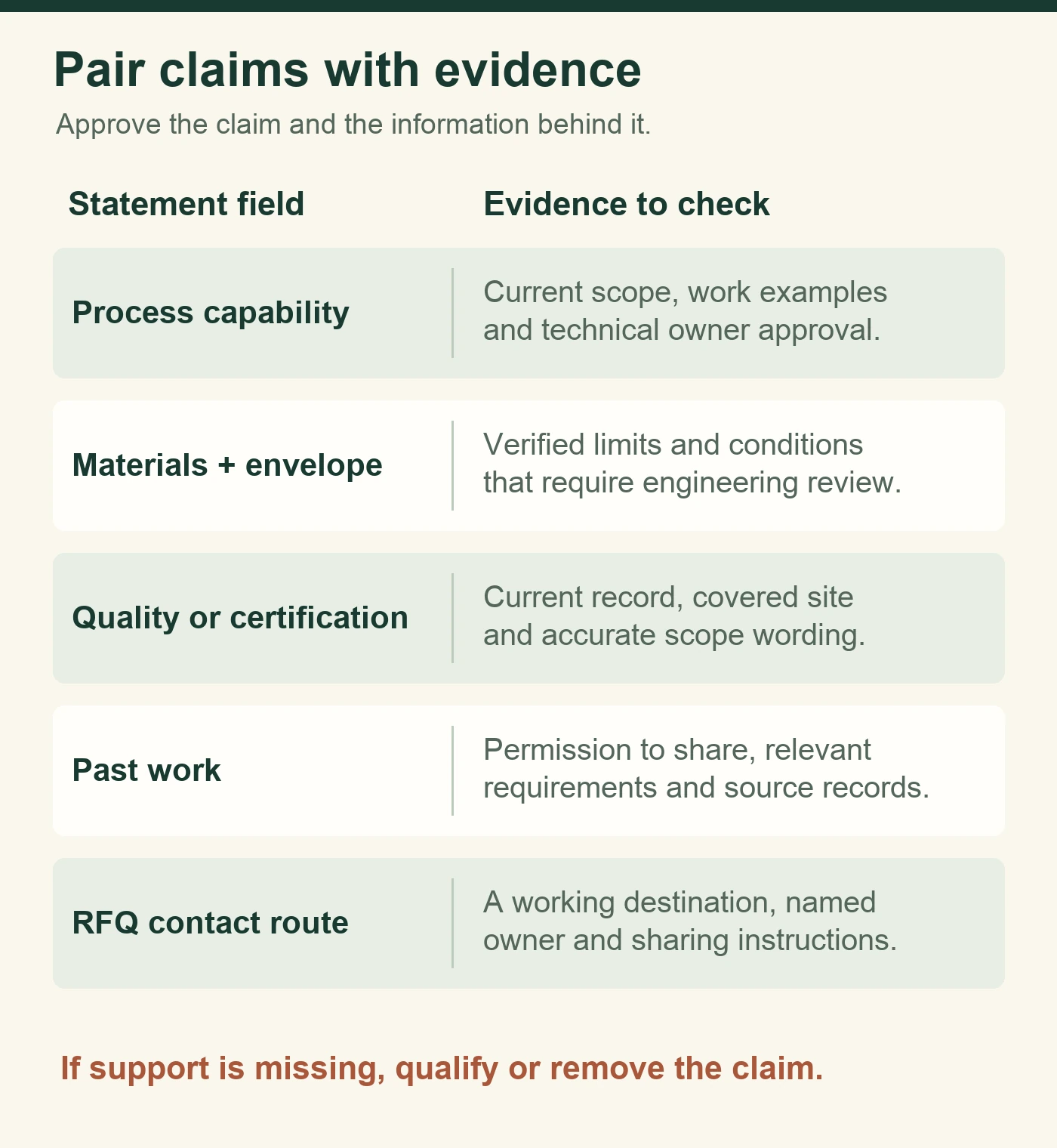
Create a small evidence record alongside the draft. For each important claim, record the proposed wording, supporting source, approving person and conditions that affect its meaning. Keep internal records in the shop’s approved systems. The public statement should contain the approved summary and appropriate public links.
A machine name belongs in the statement only when it helps the reader understand the offered work. A longer equipment list can carry model and configuration details. Confirm that the installed configuration supports what you say, and avoid treating machine travel as a promise that every part within that space can be produced.
Treat tolerances with similar care. A number can lose its meaning when separated from the feature, size, material, process and inspection conditions. Ask a technical reviewer to approve any public tolerance example. Where the conditions require a lengthy explanation, direct the buyer to a technical discussion and a more detailed capability page.
Use customer names, logos and project images only with the required permission. A permission-cleared example should accurately describe the shop’s contribution. Clearly label a fictional teaching example, including any invented quantities or outcomes. Keep examples of how to write the document distinct from claims about the business using it.
The HHS capability statement guide recommends concise information, readable organization and review by someone outside the company before sharing. Apply that reader review after your internal factual review. Ask the outside reader to identify unclear terms and missing next steps. HHS capability statement guidance.
Make the document easy to read and reuse
Choose a layout that gives the core capabilities and contact details adequate space. A reader should be able to find both without interpreting decorative labels. Use short sections, clear headings and text that remains readable when the document is printed at normal size.
Select one photograph or illustration only when it helps explain the process or work. For your shop’s public statement, use approved imagery that accurately represents what the reader is evaluating. Check what appears in the background, including drawings, screens, job travelers and customer markings, before releasing a shop photograph.
Keep text selectable in the exported document. Test reading order and link behavior in the format you intend to share. Provide meaningful link text, sufficient contrast and descriptive alternative text for informative images. The accompanying website page gives readers another way to access the same important information.
Give the file a recognizable name that includes the company and document purpose. Put a revision date inside it. Keep the source editable so the next update takes a short review instead of a complete rebuild. Record where the current public copy is published and which team members distribute it.
Open the exported file on a phone and a desktop, then print it if paper distribution is planned. Check small text, page breaks and contact links. Ask someone to reach the intended next step using only the exported copy. A useful design supports that ordinary task from beginning to end.
Keep the content useful when the attachment is separated from its original email. Include a typed website address and contact details that survive printing. If you add a QR code, test its destination from the exported file and place a readable address nearby. Use a stable website destination that can continue to point buyers to the current resource after a document revision.
Connect the statement to the website and RFQ handoff
Publish the statement beside a maintained HTML introduction. That page can describe the audience, summarize the offered work and link to the current downloadable file. Link to relevant capability, equipment and quality information so a buyer can examine the details that matter to their project.
Give the HTML page an original title and description, one clear main heading and a straightforward URL. Write the page for the buyer’s question. Include the document’s version date and useful download instructions. Keep important facts in readable page text so someone can understand the offer before opening an attachment.
Carry the same next action from the document to the website. If the statement invites a fit discussion, the destination should explain how to start that discussion. Use the machine shop RFQ checklist to plan the information you request, including drawing revision, quantity, material and requested delivery timing where applicable.
Agree on who receives an inquiry, how it reaches estimating and what happens when key information is missing. Test the public contact route using the team’s approved process. A downloaded statement is only one step in the buyer’s journey. The next person needs enough context to understand the request and assign a useful response.
For help connecting supplier information, lead capture and follow-up, explore KriXis Outreach. Discuss the current handoff and the part of the buyer journey you want to improve so the scope can be considered against your shop’s actual process.

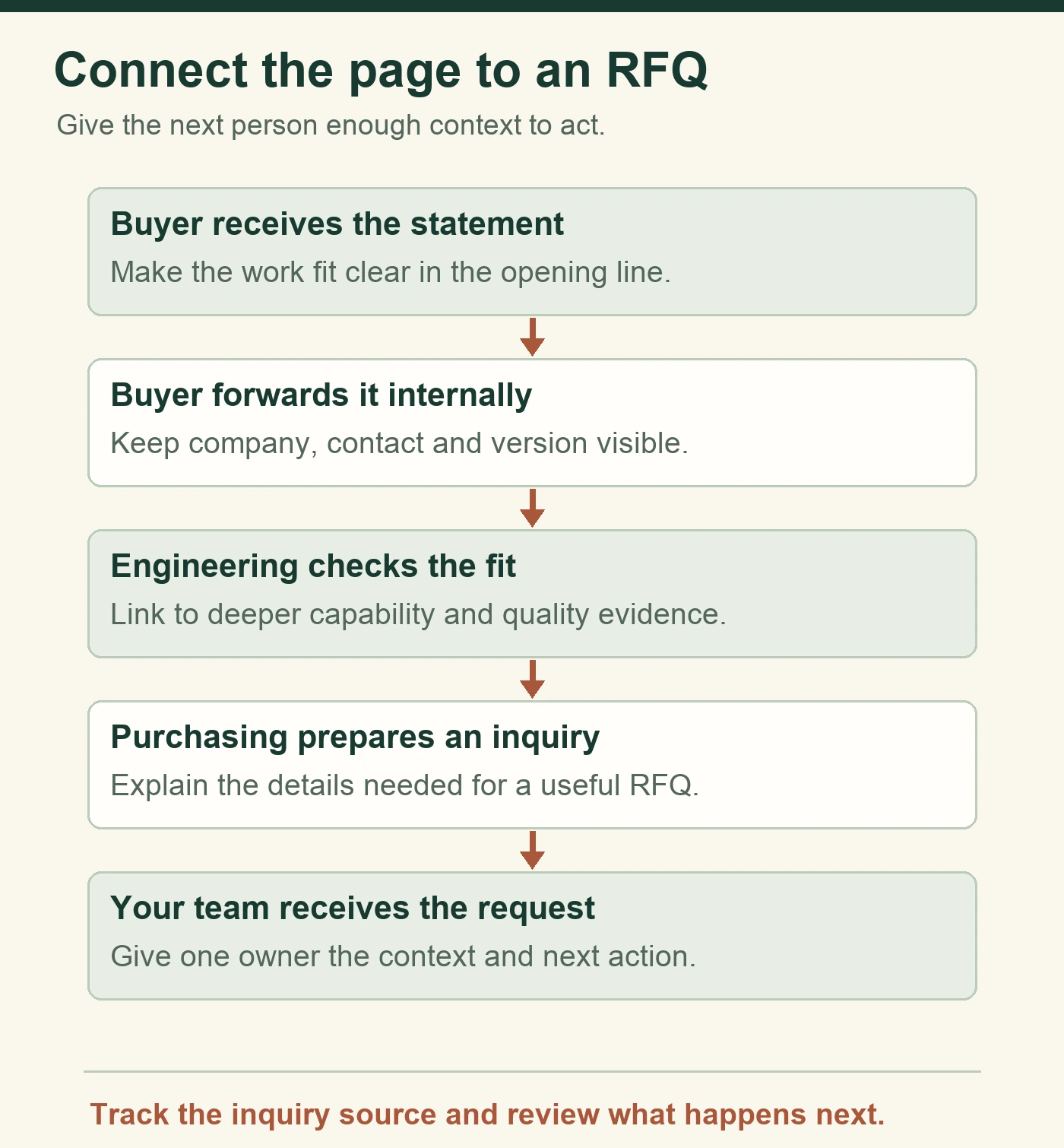
Check the handoff with a short internal exercise before distribution. Have one person act as the buyer and another receive the inquiry. Use a harmless fictional request that follows the published instructions. Confirm that the recipient can identify the capability being discussed, assign the next owner and explain what additional information is needed. Record any confusing steps and revise the instructions before using the statement in outreach.
Assign an owner and review what buyers ask next
Name one person responsible for the current document. Identify the reviewers for technical scope, quality information and inquiry handling. Establish review triggers such as an equipment change, a contact change, a revised certification or a change in the work the shop wants to pursue.
Keep a simple distribution record where it helps the team maintain copies. List the website location, email attachment source and printed versions in use. When an important fact changes, update the source, replace the public file and tell the people who distribute it. Preserve old versions internally when your records process requires them.
Review buyer questions after the statement is used. If several readers ask whether a process is performed in house, clarify that scope. If they cannot locate the technical contact, improve the contact section. Record what the buyer actually asked so the revision responds to an observed problem.
Measure the steps your systems can support. You may be able to count document downloads, visits to the capability page and inquiries that mention the statement. Keep those events separate from qualified opportunities and awarded work. A download shows that the file was requested. Sales review establishes what happened afterward.
Use the first version to improve the conversation. A focused statement, maintained source page and clear owner give the team a practical starting point. Add detail when buyers need it and when the shop can support it with current facts.
Common capability statement questions
How long should a machine shop capability statement be?
Start with one page when the purpose is an introduction. Add a reverse side only when the audience needs the information and the document remains easy to scan. Link to maintained website pages for fuller process, equipment and quality details. A specific buyer’s requested format should guide a response to that request.
Is a capability statement useful for commercial buyers?
Yes. An engineer or purchasing contact can use a concise supplier summary when introducing a shop internally. Focus the content on the work that audience needs to evaluate. Business identifiers and contracting information should be included when relevant and verified. Commercial introductions can usually begin with scope, evidence and contact details.
Should the statement include a complete machine list?
Include equipment details that explain the intended capability. Link to a maintained list for the rest. Long model inventories can crowd out process fit, inspection information and the next action. Check each included specification against the installed configuration and approved public wording.
How often should the document be reviewed?
Choose a review interval the team can maintain, then update sooner when a material fact changes. A printed review date helps readers identify the version they received. Assign the task to a named owner and keep the current source with the team’s approved marketing materials.
Can a template establish a shop’s qualifications?
The template organizes information for review. The shop supplies the underlying facts, approvals and current supporting records. Have the responsible people confirm each claim before publication, and use the buyer’s qualification process when it applies. Keep the statement’s date and contact route visible so a reader can ask for current details.

Leave a Reply
Want to join the discussion?Feel free to contribute!