
How to Find Manufacturing Customers for Your Machine Shop
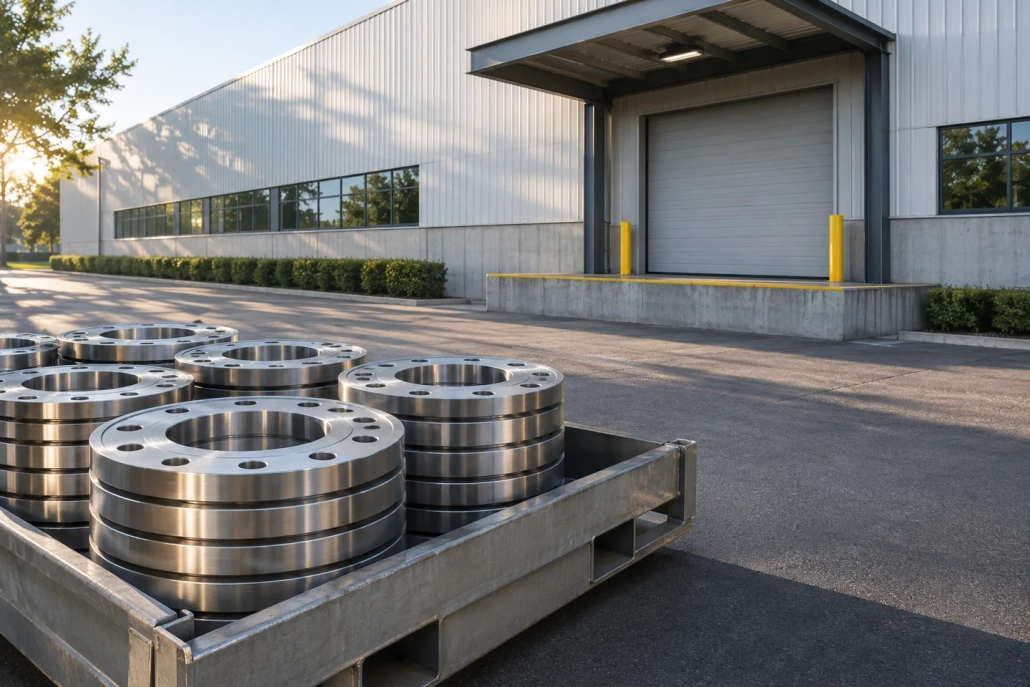
To find manufacturing customers for your machine shop, start with one type of work you can support, then research companies whose products give you a specific reason to contact them. Record what you found, explain the possible fit and check the contact route before preparing an introduction. A company name becomes useful when your team can explain why it belongs on the list.
Prospecting begins before an RFQ arrives. Whether a company outsources the work, has an approved supplier or plans to buy soon becomes a question to investigate. Keep those unknowns visible while deciding where a conversation could be worthwhile.
This guide describes a small research process an owner or sales lead can run with estimating. It also explains how to discuss the KriXis Outreach private pilot, which starts with one capability and a focused group of potential buyers.
Define the work before searching for companies
Write a short description of the work you want more of. Include the process, relevant component families, materials your team can discuss and the production context that makes sense for the shop. Describe the work at a level an engineer or sourcing contact can recognize.
“More machining customers” leaves the researcher with too many interpretations. A narrower brief might focus on repeat turned components for equipment builders. Another might focus on milling replacement fixtures for nearby production facilities. These are different research assignments with different company sources and reasons to make contact.
Have the technical owner review the brief and confirm how equipment travel, available tooling, material and component geometry affect feasibility. Record any limits that affect an initial fit discussion, including outside processing, inspection needs or quantities that deserve further review.
Use your approved machine shop capability pages as a source. Where those pages leave important questions unanswered, ask the shop to resolve them before repeating the claims in an email. The research brief should reflect what the team is prepared to discuss today.
Choose one commercial priority as well. The owner might want work in an existing delivery area, projects that suit a particular process or buyers whose product families match established experience. Use that priority when comparing the potential fit of companies of different sizes.
Use geography as a practical research boundary
A search radius helps make the first research pass manageable. Decide what that radius means for your shop. Local pickup, site visits, delivery routes and the ability to inspect an application can make proximity useful. Some projects can be served farther away, depending on the work and the buyer's requirements.
Start with the geography your team can explain. Use the shop location and a realistic area for the first pass, then record exceptions when there is a clear reason. A radius should organize research without hiding a strong relationship or a practical limitation.
Company headquarters can differ from the facility that needs the work. Check whether the public source describes an office, a factory, a distribution site or a service operation. A nearby corporate address alone provides little evidence about where purchasing or engineering takes place.
Record the location source and its date. If the company lists several facilities, identify which one appears relevant and leave the buying location as an open question. This gives the person preparing the introduction a useful fact to confirm.
Use a small first batch. Ten thoroughly reviewed companies can reveal whether your capability brief is too broad or your sources are too weak. Expand when the team can apply the same review consistently.
Look for products and operations your shop could support
Begin with a company's own public material. Product pages, application descriptions, facility information, service manuals intended for public use and published supplier instructions can help explain what the company makes or maintains. Search results are a starting point. Open the source and read enough context to understand the claim.
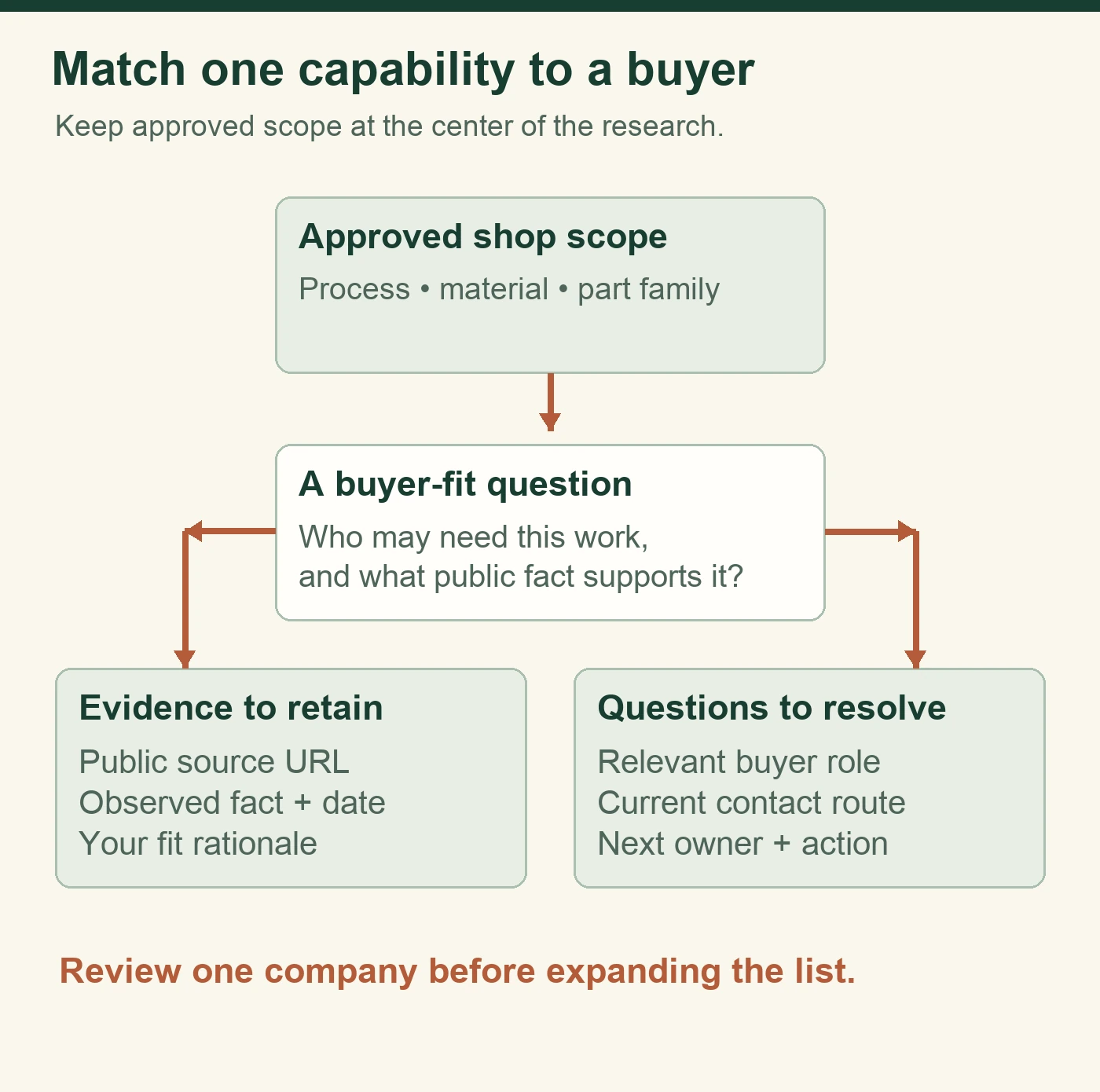
Look for a plausible connection between the product or operation and your approved capability. A manufacturer that describes packaging machinery may use several kinds of purchased components. Your task is to identify the connection you can support with evidence, then decide which question could establish whether a discussion is relevant.
NIST's supplier selection guidance emphasizes understanding a supplier's capabilities, quality systems and business fit. Those buyer concerns provide a useful basis for the evidence a shop prepares for an introduction. Give the reader enough detail to assess relevance and ask the next question. NIST supplier selection guidance.
Keep a short source excerpt or factual note with the public URL. “Company product page describes washdown conveyors” is more useful than “good manufacturing lead.” The factual note can be checked again later, and it gives the reviewer something concrete to accept or challenge.
Avoid turning product similarity into an order forecast. The company may make a component internally, purchase an assembly or use a supplier with a qualification process. Record those possibilities as questions for the conversation.
Separate evidence, possible fit and buying questions
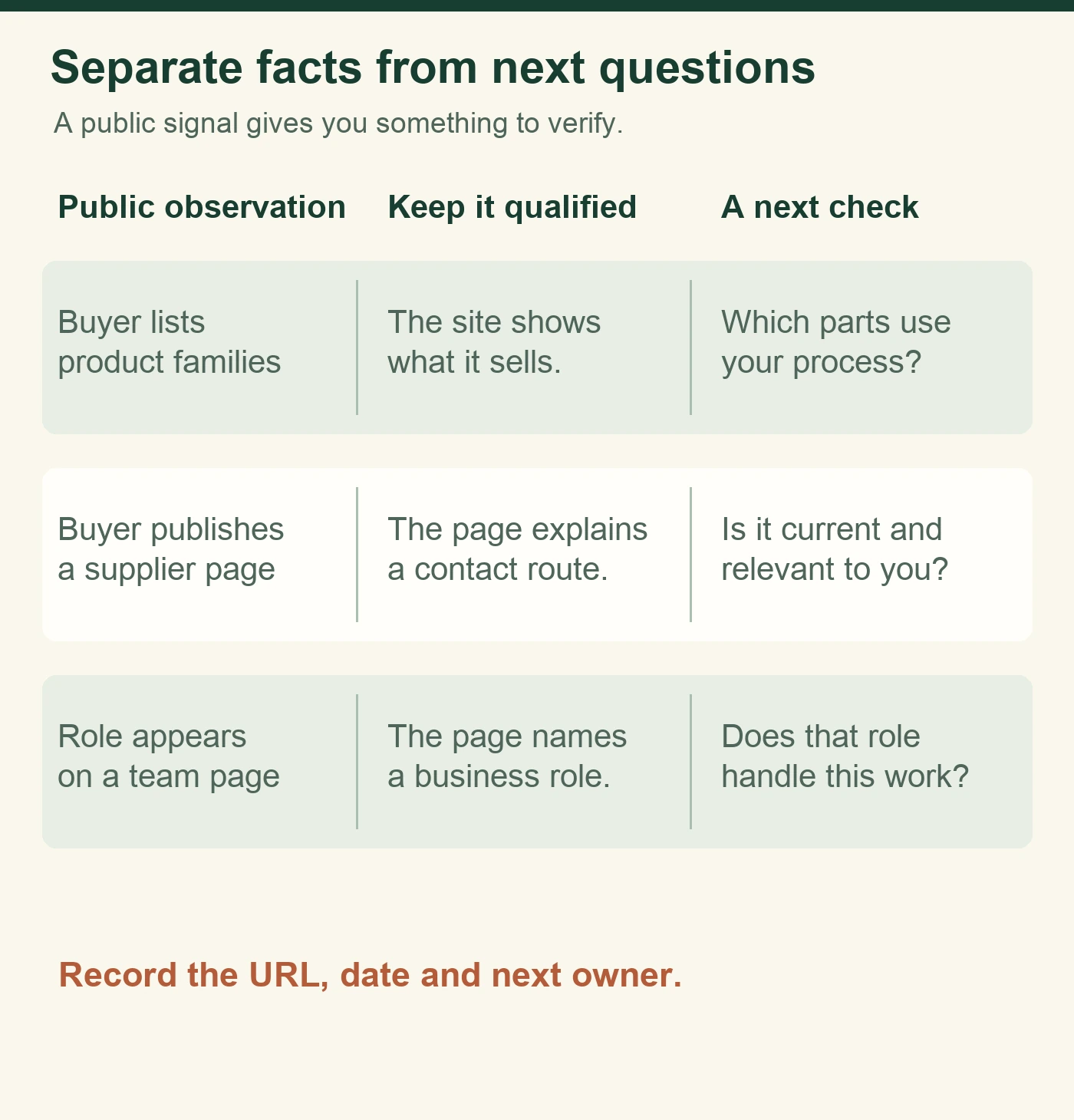
Use three different fields in each company record. The first contains the public fact and source. The second explains why your capability might be relevant. The third records what remains unknown. This simple separation makes a research list easier to review and a sales message easier to write accurately.
For a clearly fictional example, imagine Harborline Packaging Equipment publishes a washdown conveyor range. A fictional shop's approved brief covers stainless turned rollers. The source fact is the conveyor description. The possible fit is a discussion about roller work. Whether Harborline buys rollers from outside suppliers remains unknown.
The same record should explain why the match deserves attention. Does the source identify a component family the shop understands? Is the facility within the chosen area? Can the shop provide a useful initial answer without assuming dimensions, materials or a required certification?
A second fictional company might sell finished food products and mention conveyors only in a general facility tour. That source may support a maintenance conversation, but it provides weaker evidence for a repeat component supply opportunity. The researcher should explain that difference so both records can be reviewed fairly.
Use a status that describes the work completed. Examples include Research started, Fit needs review, Contact route checked and Ready for draft review. Save buyer interest and RFQ status for events supported by actual responses.
Find a contact route that fits the buying question
Read the company's contact and supplier pages before selecting an address. A published supplier intake form may be the intended route for new vendors. Another company may direct technical questions to a department or provide a general business contact that can route an inquiry.
Choose the route based on the question you plan to ask. An engineer may be able to discuss a component requirement while purchasing owns supplier onboarding. Confirm the person’s role and record who owns supplier evaluation.
Record where the contact information came from and what purpose the company gives for that channel. Recheck stale information before use. If the route is unclear, a brief routing question can be more useful than a detailed pitch sent to an unrelated department.
Check existing contact history before adding another person. Someone at the same company may already be in a current conversation, may have directed you to purchasing or may have asked to stop receiving messages. Give the sender that context so the shop can act consistently.
Use a public business address to identify a possible route and check the recipient’s contact preferences. Keep contact preferences, unsuitable addresses and delivery failures visible in the research process so they remain available to everyone preparing the next batch.
Review a small list with the person who knows the work
Bring the list to a short review before preparing emails. The researcher supplies the source and fit explanation. The technical reviewer checks the capability connection. The owner or sales lead decides whether the proposed conversation serves the shop's commercial priority.
Ask the reviewer to make a concrete decision for each company. Keep it, request more evidence, change the intended conversation or remove it from the current batch. Record a short reason so the next research pass can improve.
Several weak matches may point to a problem in the original brief. If the list includes many companies that assemble complete systems while the shop wants recurring component work, refine the research terms and source selection. A clearer brief often saves time in every later step.
Keep a distinct reason when a company is removed. Outside geography, uncertain capability fit, wrong type of facility and a contact preference are different findings. Combining them into a single rejected status makes it harder to improve the list or respect a specific instruction later.
Agree on a modest reviewed batch before scaling the effort. The KriXis Outreach private pilot starts with one shop capability and up to 25 prospects. Discuss the work you want, your geographic area and who will review the matches before deciding how the pilot should proceed.
Turn one researched observation into a useful introduction
Use the approved research to explain why you are making contact. State the public observation accurately, connect it to the work your shop can discuss and ask one question the recipient can reasonably answer. Keep the first message short enough to read without opening an attachment.
In the fictional conveyor example, the shop could ask whether the company considers outside suppliers for stainless roller work. A small checklist of information needed for a fit review may help the recipient decide what to send or whom to involve. Avoid assuming that the company has a current RFQ.
Link to a relevant capability page when it answers the reader's likely question. A complete equipment inventory or a large brochure can wait until it serves the conversation. Choose one useful next action the recipient can reasonably answer in the first conversation.
For wording examples, use the companion machine shop sales email templates. Those templates concern a first supplier conversation. Once a buyer has requested and received a quote, the quote follow-up guide helps plan the next action around that opportunity.
Before commercial email goes out, verify sender details, subject accuracy, the business postal address and an easy opt-out route. The FTC explains that U.S. commercial email rules also apply to business-to-business messages. Keep stop requests available to the people handling future contact. FTC commercial email guidance.
Learn from replies and give real RFQs a separate review
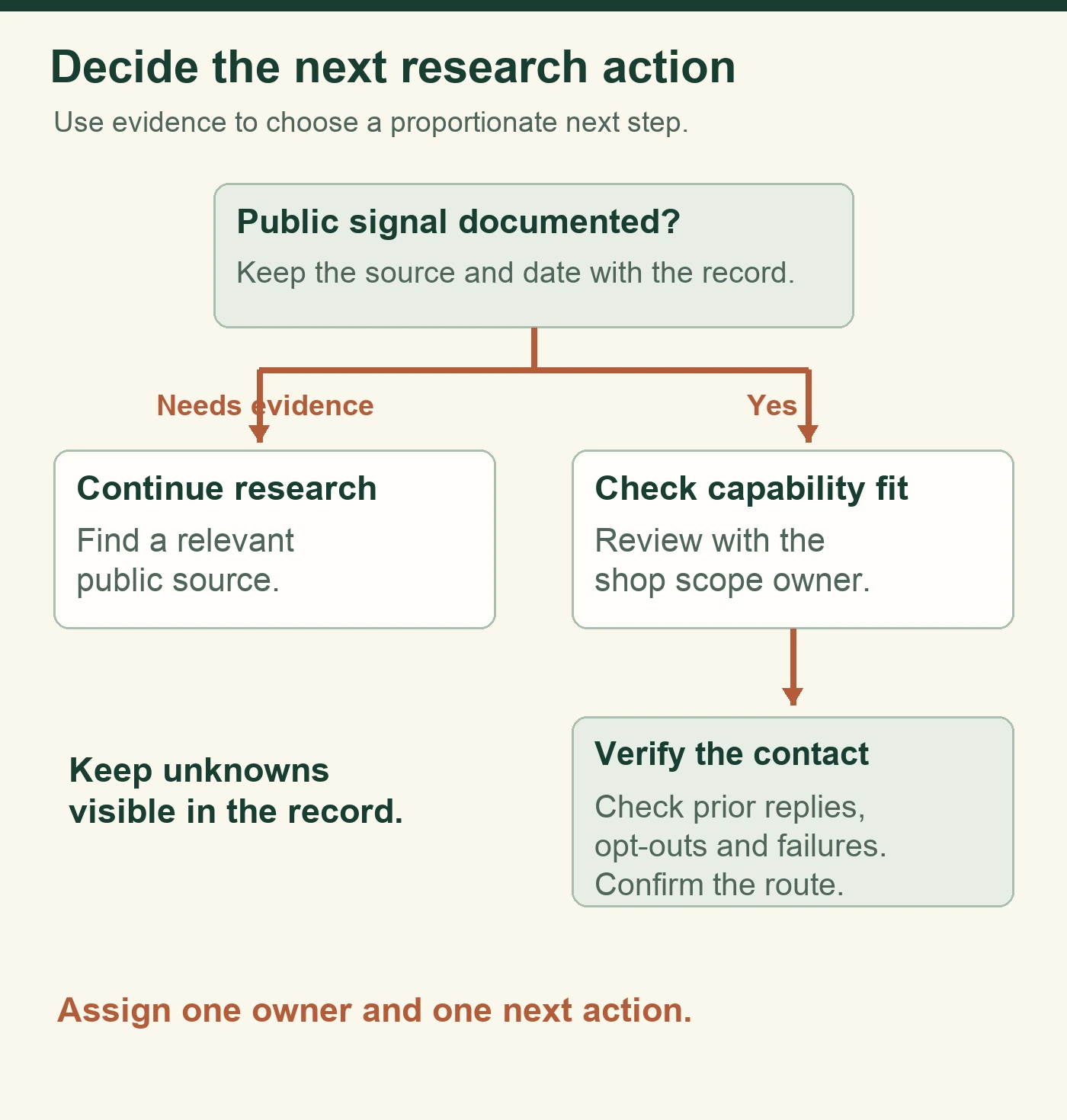
Record what the recipient actually says. A routing reply, a request for more information, an explicit interest in a discussion and an RFQ are different outcomes. Save the original response or a reliable reference so the next person can understand the context.
When a buyer asks for a quote, move into your established estimating process. Confirm the requirements needed for a meaningful review. The machine shop lead qualification guide provides a practical structure for checking fit and missing information.
Review results against the original batch. Count the companies researched, matches approved, messages sent and responses received. Then look at the questions buyers asked. A list can need refinement even when a few people reply. A useful routing response can improve the next batch without becoming a sales opportunity.
Be careful with denominators. If 20 companies were reviewed and 12 were contacted, reply rate should identify whether it uses the 12 contacted companies or another count. Keep companies, contacts and messages separate when several people or follow-ups are involved.
Fit this process into the broader machine shop lead generation plan. Assign an owner for research, one for draft review and one for handling responses. A defined next action helps the shop learn from the first group before investing in another.
Common buyer research decisions
What if the company gives very little product detail?
Save the limitation and decide whether another public source can answer the fit question. A trade association listing may confirm the business category, while a company page describes the actual products. Keep both sources identified. If the available evidence stays too broad, ask for more research or leave the company outside the first batch. The reviewer should be able to understand that decision later.
Should several people at one company receive the introduction?
Choose the route the company publishes for the purpose. When a named contact provides routing instructions, keep them with the record. If several shop team members are researching the same company, appoint one owner to coordinate the next step. That prevents separate messages from creating conflicting conversations and makes a reply easier to handle.
When should a reviewed prospect be researched again?
Recheck the source when an important fact changes, the information becomes stale or the next planned contact depends on it. A new facility, discontinued product family or changed supplier page can alter the original reason for contact. Record what changed and have the relevant reviewer confirm whether the company still belongs in the current work brief.
What the KriXis Outreach pilot can help you review
KriXis Outreach starts with your shop website, one capability and a geographic area. The private pilot focuses on buyer research, reviewed personalized drafts and recording replies. Your team checks the capability match and keeps responsibility for technical statements, pricing and feasibility.
Connected mailbox sending and automatic follow-ups are pending. Discuss the proposed scope and available process before treating either as an operating part of your shop's sales routine. If a buyer requests a quote, your team continues through its usual quoting workflow.
Bring a specific work brief to a KriXis Outreach pilot conversation. Include the jobs you want, the area you can serve and a public page that describes your capability. Those details provide a practical starting point for deciding which companies deserve a closer look.

Leave a Reply
Want to join the discussion?Feel free to contribute!