
Machine Shop SEO in 2026: A Practical RFQ Growth Guide

Updated September 2026.
Machine shop SEO should help the right buyers find clear evidence of capability, understand whether a shop fits their need, and begin a more useful RFQ conversation. It is not a traffic contest, and it is not a shortcut to sales. The strongest program connects search visibility with technical credibility, a practical website experience, and a follow-up process that does not lose context.
This guide is a practical starting point for machine shops that want to improve qualified search visibility without relying on thin location pages, keyword stuffing, or performance promises they cannot substantiate.

What machine shop SEO should actually produce
A useful SEO program improves four things at the same time:
- Qualified discovery: buyers can find pages relevant to a real process, material, application, or manufacturing need.
- Capability confidence: the website answers practical questions with accurate, current information.
- A clear next step: prospective customers can move from research to an RFQ or consultation without friction.
- Better measurement: the team can see which pages and channels contribute to qualified inquiries.
That standard keeps the work focused on business development. A high impression count or a temporary ranking change is useful context, but it does not replace a buyer who understands the offer and has an easy way to reach the right person.
1. Publish capability proof buyers can evaluate
Start with the information a prospective customer actually needs to evaluate a shop. Build or improve pages around the processes, materials, part characteristics, industries, and production situations your team can accurately support. Explain the work in clear language and avoid vague claims such as “best quality” or “any part, any time.”
Useful capability proof can include equipment context, material experience, process explanations, inspection and communication practices, non-confidential examples, and honest guidance on preparing an RFQ. If a page references a tolerance range, certification, quantity, or turnaround expectation, make sure it is current and verifiable before publishing.
Original photos also matter. A clean image of a process, inspection step, engineering discussion, or finished component can help a buyer understand the work far more quickly than generic stock photography. Each image should earn its place beside relevant content and use accurate alternative text.
2. Map search intent to real RFQ paths
Buyers rarely search only for a company name. They may search for a machining process, a material, a part type, an industry application, a manufacturing problem, or a supplier in a particular geography. The goal is not to build hundreds of nearly identical pages. It is to make the most relevant page genuinely useful for the question behind the search.
Review core pages through a buyer’s lens. Can someone understand what the shop does, who it serves, what information to include with an RFQ, and where to go next? Each major service or capability page should link naturally to related resources and to a direct contact path. Internal links should help readers continue their research, not repeat a keyword for its own sake.
If you need a broader plan that connects website content, search, paid media, and lead follow-up, review KriXis digital marketing services for machine shops.
3. Make technical SEO support discovery
Technical SEO creates a dependable foundation for good content. Important pages need a clear, descriptive title, a useful meta description, one primary heading, logical subheadings, readable text, and a self-referencing canonical URL. Search engines also need to be able to crawl the pages you want buyers to find.
Audit your XML sitemap, robots directives, canonical URLs, internal links, and indexability settings. Look for pages that are unintentionally blocked, duplicates that compete with current pages, broken destinations, and old promotional pages with expired offers. When a page has a clearly equivalent current replacement, a direct redirect can be appropriate. When it is a historical or no-longer-relevant offer without a one-to-one replacement, keeping it out of search results may be the more honest choice.
Google’s own SEO Starter Guide remains a useful reference for the fundamentals: organize content for people, describe pages clearly, make sites accessible, and improve the experience instead of looking for a loophole.
4. Build local and national visibility around real reach
Many machine shops need two complementary signals. Local buyers should find accurate business information and understand the company’s service area. National buyers should be able to evaluate specialized capabilities without relying on a generic “near me” page.
Keep the business name, address, phone number, website URL, and hours consistent wherever the company is represented. Maintain accurate business profiles and only claim locations the business genuinely serves. Then build substantive capability content for the processes and markets that matter most. That approach is more durable than publishing thin variations of the same page for every city or industry.
5. Turn search visits into RFQs
SEO only creates an opportunity. The website has to make the next step easy. A good RFQ path explains what a prospect can send, gives them a clear form or contact option, and avoids asking for information that is not needed to start a productive conversation.
For most machine shops, a useful inquiry form might ask for contact details, part or project context, material, approximate quantity, timing, and a way to attach drawings or supporting files when appropriate. Publish response expectations only if the team can consistently meet them. Then make sure each inquiry moves into the same CRM or lead-management process used for other channels, with its source preserved.
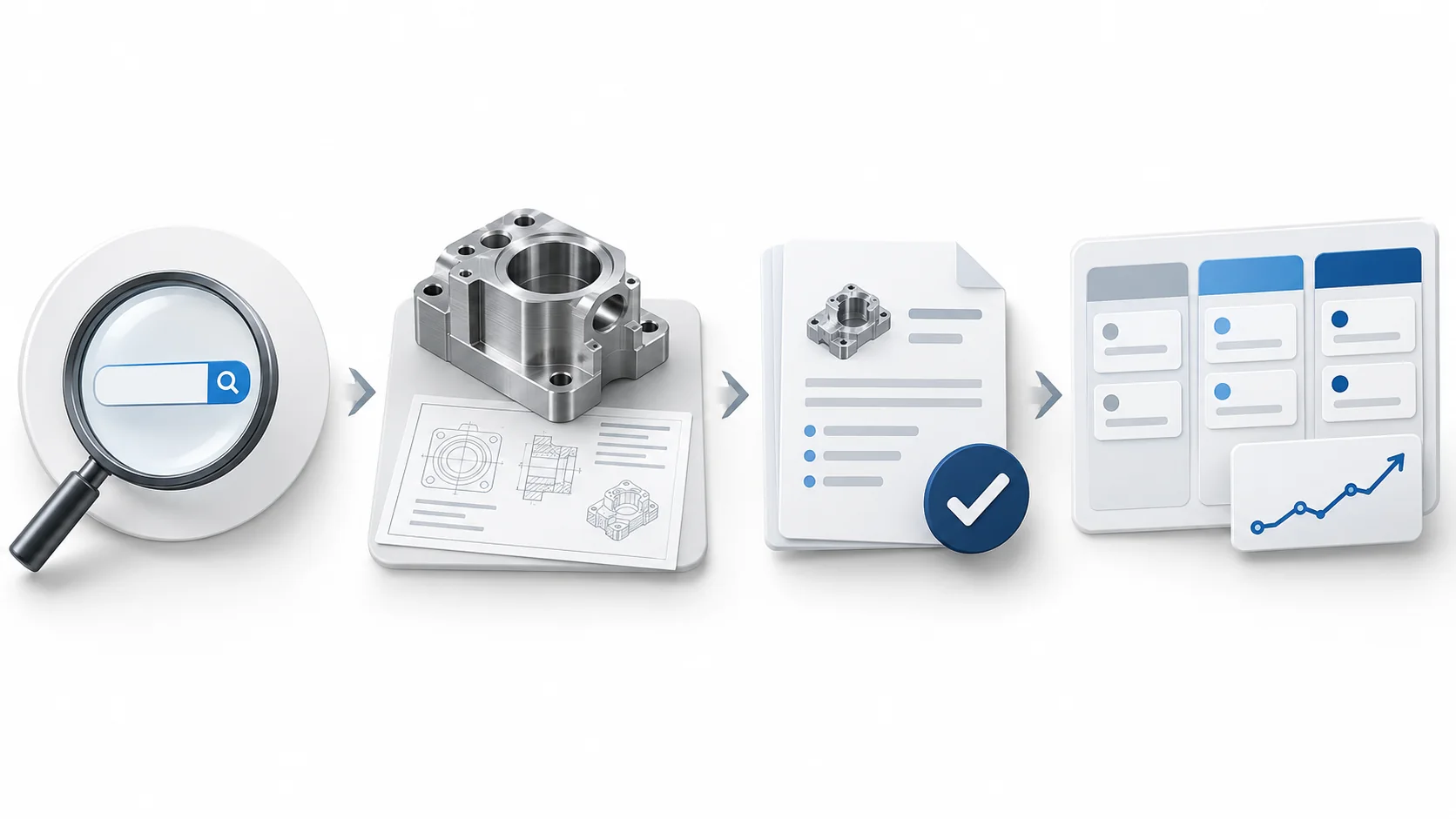
KriXis also covers this handoff in its article about CRM for machine shops.
6. Build for people first—not AI shortcuts
There is no special markup or secret content format that makes a page automatically succeed in AI-powered search experiences. The same foundation matters: original expertise, clear organization, technically accessible pages, accurate information, and a useful user experience. Google’s guidance for AI features and your website makes this point directly: standard SEO best practices apply.
Use AI tools, if at all, as a drafting or research assistant—not as a replacement for the manufacturing knowledge, quality standards, customer confidentiality, and real-world judgment that prospective buyers need to see. A page should be reviewed by someone who can verify every substantive claim before it is published.
A practical 90-day machine shop SEO plan
A focused program is more useful than trying to change every page at once. This roadmap creates a sensible order of operations:

- Days 1–30: Establish the baseline. Confirm indexability, crawlability, canonical URLs, sitemap coverage, business information, broken internal links, and the current RFQ flow. Document a baseline for qualified inquiries and the pages that assist them.
- Days 31–60: Strengthen the pages closest to revenue. Improve the home, service, capability, and contact pages. Add or refresh one high-value buyer resource. Replace generic calls to action with helpful next steps.
- Days 61–90: Improve conversion and measurement. Test the RFQ path, preserve lead source data, review Search Console and analytics trends, and use the findings to choose the next content or technical priority.
What to measure
Track signals that help the business make better decisions: organic discovery for relevant topics, visits to capability pages, quote-form starts, completed RFQs, calls, qualified inquiries, source attribution, and—where systems allow—closed revenue connected to a marketing source. Avoid declaring success from rankings alone.
It also helps to keep a simple change log. Record what was updated, when it was published, and why it was changed. That makes it much easier to learn from the work than reacting to a single day of traffic or a short-term ranking movement.
Make the next improvement useful
Start with the pages that are closest to a real buyer decision. If your website needs a more structured review, read the machine shop SEO audit checklist. If you would like to discuss how the content, SEO, website, and CRM pieces fit your specific business, start a conversation with KriXis.

Leave a Reply
Want to join the discussion?Feel free to contribute!